
 By Admin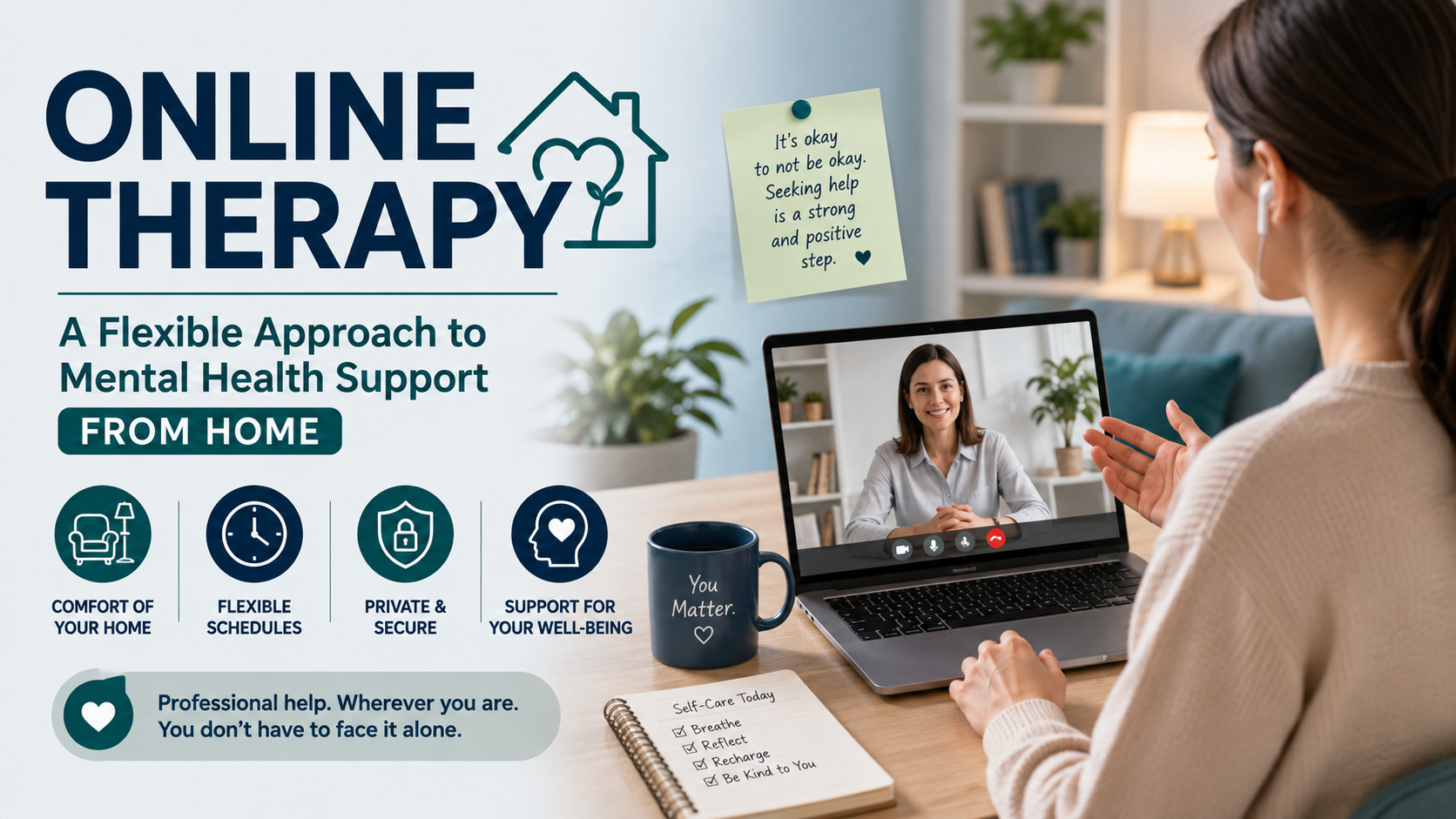
Getting mental health support can be difficult when everyday responsibilities already consume most of your time. Commuting, work schedules, caregiving, education, and limited access to suitable professionals can make regular appointments challenging. For many people, receiving psychological support virtually offers another way to make therapy part of their routine.
Online therapy allows clients to connect with qualified mental health professionals remotely when virtual care is clinically appropriate. It can be used to address concerns such as anxiety, depression, stress, emotional difficulties, avoidance, and certain repetitive behavioral patterns.
However, convenience alone does not determine whether therapy will be useful. The therapeutic approach, clinician’s experience, privacy, clear goals, and willingness to practice new skills can all influence the experience.
What Makes Online Therapy Different?
The most obvious difference is location.
Instead of travelling to an office, you participate in sessions from a private location using appropriate technology. The core purpose of psychotherapy, however, remains similar: understanding difficulties and developing healthier ways of responding to them.
A therapist may explore your symptoms, routines, thoughts, relationships, coping strategies, and current challenges.
Together, you can establish goals that give treatment direction.
Convenience Can Improve Consistency
Therapy requires regular participation to create opportunities for meaningful work.
For someone with a demanding schedule, travelling to and from appointments can become a significant barrier. Virtual sessions remove commuting time and may make appointments easier to integrate into the week.
Fewer Practical Disruptions
Bad weather, transportation difficulties, or lengthy travel may be less likely to interfere with a virtual appointment.
This flexibility can be particularly useful when consistent attendance would otherwise be challenging.
Still, online therapy should not be treated casually simply because it happens at home. Creating dedicated time for each appointment remains important.
Your Environment Matters
A productive virtual session requires more than a stable internet connection.
Privacy can affect how comfortably you discuss personal concerns. If you are worried that another person can overhear the conversation, you may naturally avoid certain subjects.
Choose a private, quiet location whenever possible.
Reduce Distractions Before Starting
Phones, email notifications, household tasks, and open browser tabs can divide your attention.
Before your appointment, silence unnecessary notifications and close unrelated applications.
Using headphones may also improve privacy and help you stay focused on the conversation.
These small preparations can make the session feel more intentional.
Therapy Can Address Patterns in Real Time
One interesting aspect of online therapy is that sessions may occur in the same environment where certain difficulties happen.
Perhaps procrastination occurs at your desk. Anxiety becomes stronger before virtual work meetings, or repetitive habits appear while sitting in a particular room.
Being in that environment may provide useful opportunities to identify triggers and discuss realistic strategies.
The therapist and client can connect therapeutic ideas directly with everyday circumstances.
Virtual Therapy Can Still Be Structured
Online sessions do not need to become informal conversations without direction.
Depending on the therapeutic approach, a session may include reviewing the previous week, identifying a particular challenge, examining thoughts or behaviors, practicing a strategy, and planning what to work on next.
Goals Keep Treatment Focused
Instead of a broad objective such as “feel less stressed,” therapy might focus on specific outcomes.
You may want to reduce avoidance, establish a healthier routine, return to social activities, manage worry differently, or respond more effectively to difficult emotions.
Specific goals also make progress easier to recognize.
Choosing a Therapist Requires More Than Finding Availability
The ability to schedule an appointment quickly is useful, but relevant professional experience should also influence your decision.
Different mental health concerns may require different approaches.
For example, someone experiencing obsessive-compulsive symptoms may benefit from a clinician familiar with OCD-specific interventions, while another person seeking help for depression may need a different treatment emphasis.
Ask potential clinicians about their qualifications, experience, therapeutic methods, and approach to treatment planning.
Prepare for the First Session
You do not need to prepare an elaborate history before beginning therapy.
However, thinking about a few questions beforehand can help.
Consider what prompted you to seek support now. Think about when the difficulty started, how it affects your everyday life, and what you have already tried.
Define What Improvement Would Mean
Imagine that therapy has been helpful.
What would be different?
Perhaps you would sleep more consistently, spend less time worrying, avoid fewer situations, communicate more effectively, or participate again in activities you have stopped doing.
Concrete answers can help establish meaningful treatment goals.
Therapy Requires Work Between Sessions
An appointment represents only a small portion of your week.
For many therapeutic approaches, meaningful change develops when strategies discussed during sessions are practiced in everyday situations.
You might observe a recurring thought pattern, change a routine, approach something you normally avoid, or practice a new response to emotional discomfort.
Online therapy can provide guidance, but repeated real-world practice helps turn that guidance into usable skills.
Don’t Expect Every Session to Feel Comfortable
A useful therapy session does not always produce immediate emotional relief.
Discussing difficult experiences or changing established behavioral patterns can sometimes feel challenging.
This does not automatically mean therapy is ineffective.
A better question is whether sessions are helping you understand your difficulties, develop relevant skills, and move toward agreed goals over time.
Virtual Care Is Not Automatically Right for Everyone
Some people communicate more comfortably in person. Others may lack a sufficiently private environment for remote sessions or find it difficult to remain engaged through video.
Certain clinical circumstances may also require a different type or level of care.
For these reasons, suitability should be considered individually rather than assuming online therapy is always interchangeable with every other form of support.
How Can You Measure Progress?
Progress can be subtle at first.
Perhaps you still experience anxiety but no longer avoid an important activity. You may still have a difficult day but recover more quickly.
Someone experiencing low mood might begin completing responsibilities more consistently before noticing a dramatic emotional improvement.
These behavioral changes can provide useful evidence that therapy is influencing everyday life.
Build a Transition Around Appointments
One overlooked difference between virtual and in-person therapy is what happens immediately afterward.
With office appointments, travelling home naturally creates transition time.
With online sessions, you can finish discussing an emotionally important issue and immediately return to work.
When possible, leave a short period after the appointment to reflect, make notes, or simply shift your attention gradually.
This can help prevent therapy from feeling like another item squeezed into a crowded calendar.
Develop Skills You Can Continue Using
The value of therapy extends beyond individual appointments.
Over time, you may become better at identifying avoidance, recognizing unhelpful thinking patterns, managing emotional reactions, establishing realistic routines, or tolerating uncertainty.
These skills can remain useful when new challenges appear.
The broader aim is to increase your ability to respond flexibly rather than depend entirely on therapy sessions for relief.
Conclusion
Online therapy can offer a flexible way to receive psychological support without regular travel when virtual treatment is appropriate for the individual’s needs. It may make consistent appointments easier while allowing therapeutic strategies to connect directly with everyday environments.
Effective virtual care still requires privacy, appropriate professional expertise, clear goals, active participation, and practice outside appointments.
Rather than viewing online therapy simply as a convenient conversation, approach it as a structured opportunity to understand difficult patterns and develop practical skills. With appropriate guidance and consistent effort, those skills can support meaningful changes in relationships, routines, emotional well-being, and everyday functioning.