
 By Admin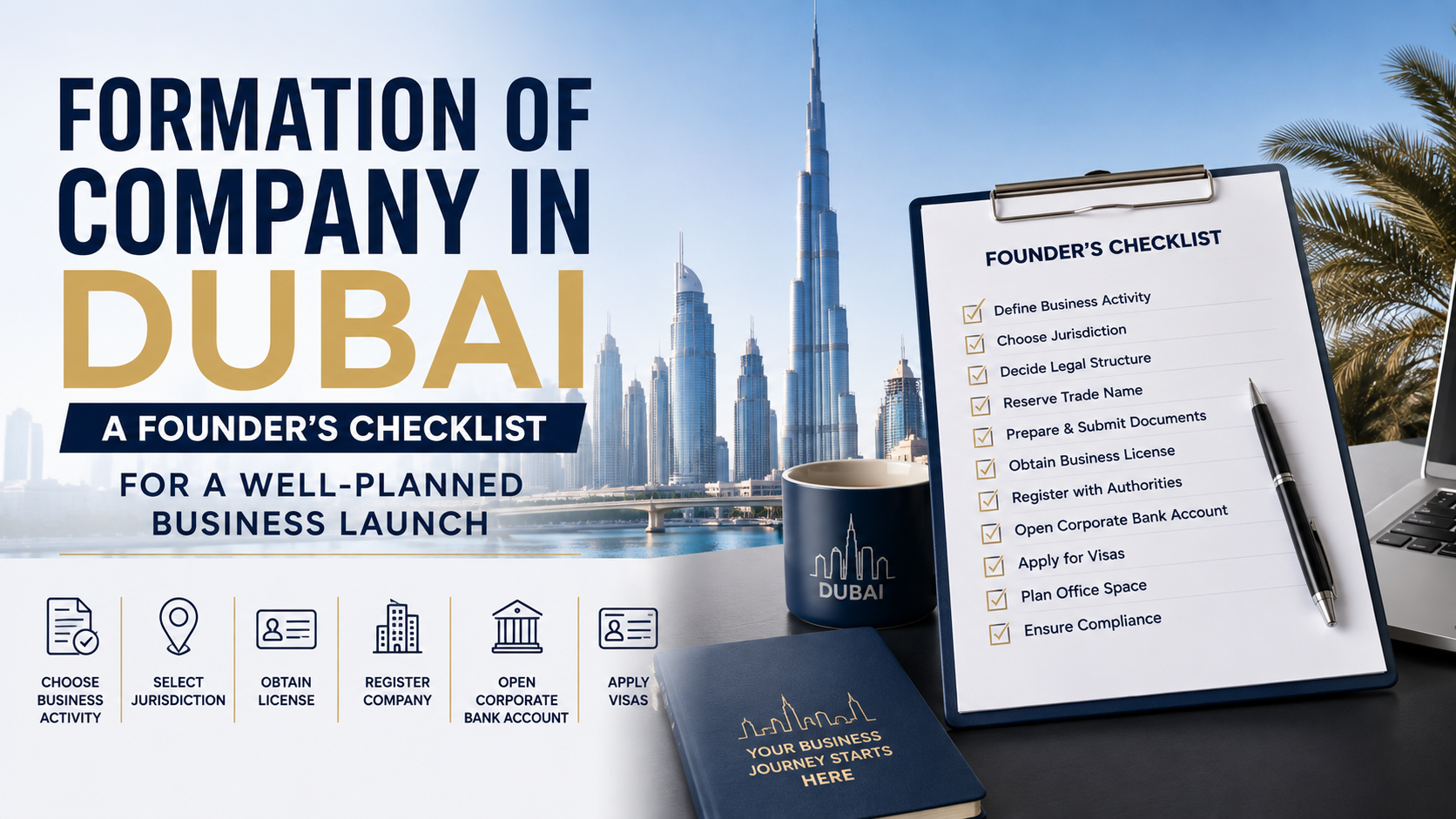
Dubai continues to attract entrepreneurs who want to establish businesses in a globally connected commercial environment. Its location, infrastructure, diverse economy, and access to regional markets create opportunities for companies across consulting, technology, trading, professional activities, and many other sectors. However, incorporation should not begin until founders have clearly defined what they want the business to achieve.
The formation of company in Dubai requires coordinated decisions about commercial activities, ownership, management, documentation, customers, operational requirements, and future growth. A founder’s checklist can make the process more organized and ensure that important considerations are addressed before the business becomes operational.
Checklist Item 1: Define the Commercial Purpose
Start by writing a concise description of the proposed business.
Explain what the company will do, who it will serve, how it will generate revenue, and where its customers are expected to be located. These details provide the commercial foundation for subsequent formation decisions.
Identify the Core Offering
Avoid beginning with a long list of potential activities.
Instead, identify the offering expected to generate the majority of initial business. Once the core purpose is clear, related opportunities can be evaluated more logically.
This keeps the company’s setup connected with actual commercial objectives.
Checklist Item 2: Understand the Customer Profile
Customers should influence formation planning because different business models can have very different operational requirements.
A company working primarily with international corporate customers may operate differently from one expecting frequent interactions with customers in the UAE.
Similarly, digital and professional businesses may have different requirements from companies dealing with physical goods.
Map a Typical Transaction
Consider how a normal customer transaction will work from beginning to end.
Where does the customer come from? How is an agreement concluded? What does the company deliver? Where do important business activities occur?
This exercise helps founders identify operational requirements before making structural decisions.
Checklist Item 3: Select Appropriate Activities
Activity selection is an important element in the formation of company in Dubai.
The selected scope should reflect genuine business operations. Founders should prioritize activities required at launch and consider additional areas only when they form part of realistic development plans.
Avoid Excessive Activity Selection
Including every activity that might someday become relevant can create an unnecessarily broad setup.
A better approach is to distinguish between immediate requirements and realistic future expansion.
Each selected activity should have a clear commercial reason behind it.
Checklist Item 4: Establish Ownership Clearly
Ownership arrangements should be agreed upon before incorporation documentation is prepared.
When several founders participate, everyone should understand their intended position in the company and their expectations regarding future development.
Important decision-making arrangements should also be discussed.
Define Management Separately
Ownership does not automatically determine operational responsibility.
One shareholder may lead daily management while another concentrates on business development or strategic matters. Founders should clearly assign responsibility for operations, administration, and important corporate decisions.
Clear authority can prevent confusion after launch.
Checklist Item 5: Consider the Right Operating Structure
The company’s structure should fit its commercial requirements rather than being chosen purely for convenience.
Founders should consider their activities, customer geography, workforce expectations, physical operating needs, and future expansion plans together.
Compare Options Against Business Needs
Create a list of essential requirements before evaluating possible arrangements.
Separate essential factors from optional preferences. A structure that satisfies the company’s critical operating needs should generally receive greater consideration than one offering attractive but less relevant features.
This keeps formation decisions objective.
Checklist Item 6: Organize Documentation Early
Document preparation should begin before formal incorporation procedures.
Founders can gather relevant identification information, shareholder particulars, business descriptions, proposed company information, and other supporting records applicable to their circumstances.
Create a Master Information File
Keep verified names, dates, addresses, identification information, and ownership details in one central record.
Use this information consistently whenever documents are prepared.
Careful document management can make the formation of company in Dubai more organized and reduce avoidable discrepancies.
Checklist Item 7: Plan Workspace and Staffing
Operational capacity should be considered before launch.
Founders need to determine whether the company requires physical workspace, customer meeting facilities, employee capacity, or other operational resources.
Forecast the Team
Estimate staffing requirements for the first few years.
Identify the roles necessary at launch and those likely to become important when the company reaches specific growth milestones.
Connecting recruitment with business development creates a more realistic staffing strategy.
Checklist Item 8: Establish Financial Record Keeping
Once commercial activity begins, the company will generate financial records.
Founders should prepare a consistent process for maintaining relevant invoices, agreements, transaction information, expenses, and other financial documentation.
Keep Corporate Information Organized
Company transactions should be documented systematically.
Establish clear storage categories and determine who is responsible for maintaining records.
Starting with disciplined financial administration is much easier than reconstructing information after transaction volumes increase.
Checklist Item 9: Prepare for Day-One Operations
The formation of company in Dubai should lead directly into operational readiness.
Before launch, founders can prepare basic customer agreements, approval processes, document-storage systems, financial workflows, and employee administration where relevant.
Create a Launch Folder
Maintain the company’s essential operational and corporate records in a secure, organized location.
This can include incorporation documents, ownership information, important agreements, internal procedures, and administrative schedules.
Authorized individuals should know where critical information is stored.
Checklist Item 10: Track Ongoing Responsibilities
Incorporation does not eliminate future administrative requirements.
Depending on the company’s circumstances, relevant renewals, filings, records, and other recurring matters may require continued attention.
Founders should identify applicable responsibilities and assign ownership internally.
Use a Corporate Calendar
Record important dates in one central calendar and create reminders well before deadlines.
Every task should have a responsible person.
This simple system can prevent important administrative matters from being forgotten when the business becomes busy.
Review the Business After Launch
The assumptions made before incorporation may not perfectly match what happens after customers arrive.
A different activity may become more important, staffing requirements might change, or the company could discover opportunities in new markets.
Regular reviews allow founders to compare the original structure with actual operations.
Use Major Changes as Review Triggers
Ownership changes, new activities, workforce expansion, or entry into another market can provide natural opportunities to reassess the company.
The objective is to keep the corporate framework aligned with the business as it develops.
Conclusion
The formation of company in Dubai should be treated as a structured business project rather than simply an administrative procedure. Strong preparation helps founders understand what they are establishing and why each formation decision matters.
By working through commercial purpose, customer geography, activities, ownership, operating requirements, documentation, staffing, financial records, and ongoing administration, entrepreneurs can build a more organized foundation.
A carefully planned company is better prepared not only for launch but also for future change. When incorporation decisions reflect genuine business needs, founders can concentrate more effectively on developing customers, strengthening operations, and pursuing sustainable growth.