
 By Admin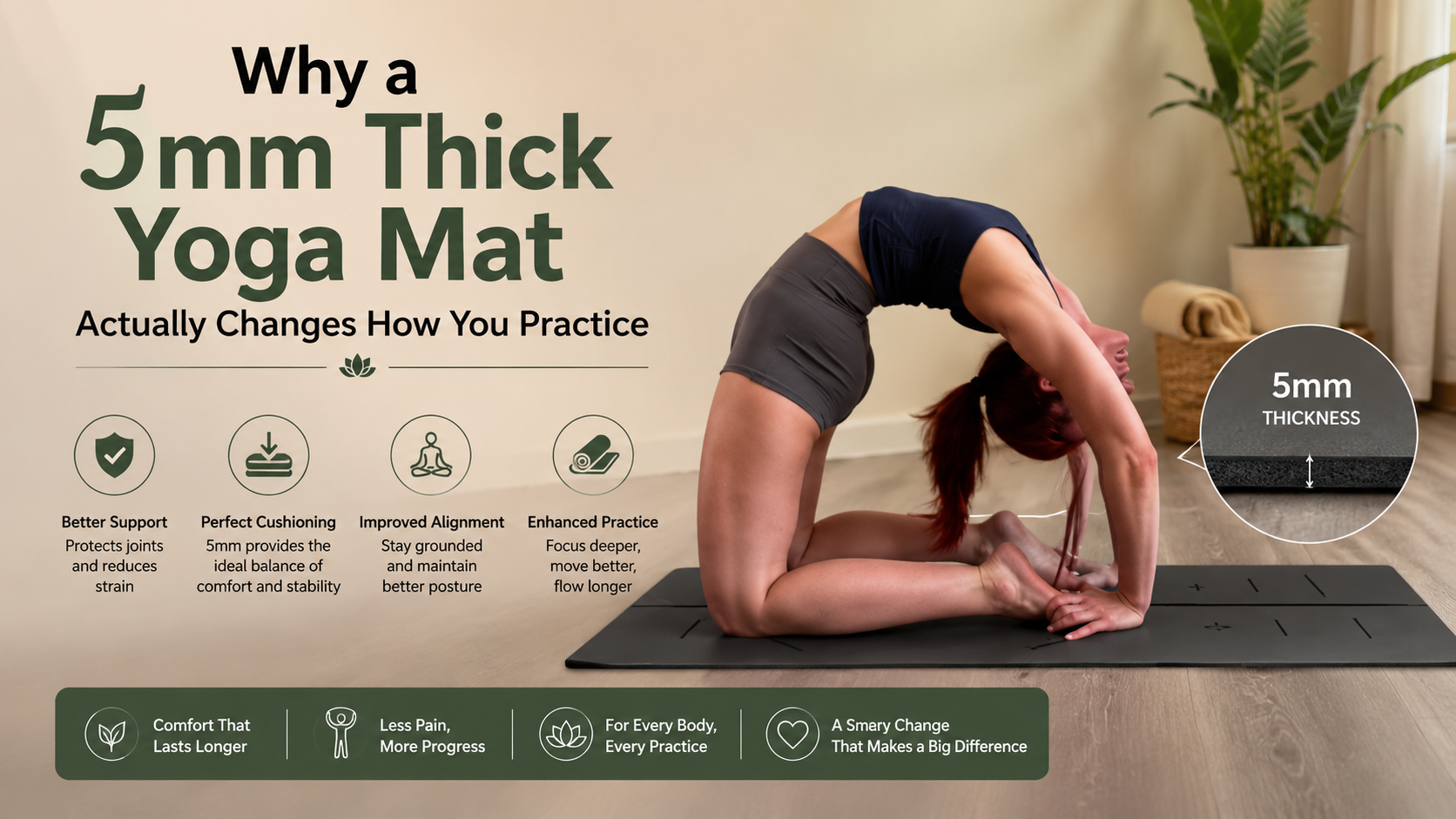
Most people shopping for a yoga mat spend a lot of time thinking about color, pattern, or price. Thickness? That usually comes last. But here’s the thing: once you roll out a 5mm thick yoga mat for the first time and actually do a full session on it, you start to wonder how you ever managed on anything thinner.
This is one of those small choices that quietly make a big difference. Not just for comfort, but for how confident you feel in your movements and how your body feels the next morning.
What Happens When Your Mat Is Too Thin
Yoga is low impact, sure. But “low impact” doesn’t mean your knees, wrists, and hips aren’t taking pressure. If you’ve ever done a long Warrior hold on a thin mat over a hard floor, you know exactly what that feels like. The discomfort starts to pull your focus away from your breath, your alignment, everything that actually matters in a practice.
A 5mm thick yoga mat sits right in that sweet spot between cushioning and stability. It’s not so thick that you feel wobbly during balance poses, and it’s not so thin that you’re basically practicing on the floor. For most people doing a mix of flows, stretches, and holds, this thickness just works.
Why a 5mm thick yoga mat Matters More Than You Think
Not all mats that look the same are the same. A lot of affordable mats are made from PVC or synthetic foam, which feel fine for a while but wear down fast, lose their grip, and frankly, you have no idea what chemicals are off-gassing when you’re breathing close to the surface during a forward fold.
This is where a non toxic cork yoga mat enters the picture differently. Cork is a naturally antibacterial, antimicrobial surface. It doesn’t absorb odors the way foam does. It gets grippier as you sweat, unlike most synthetic mats. And because it comes from tree bark without cutting down the tree, it’s one of the more genuinely sustainable materials used in yoga equipment.
Pairing cork with a natural rubber base gives you that earthy, firm feel underfoot, along with a base that actually grips the floor, whether you’re on tile, hardwood, or carpet.
Alignment Lines: More Useful Than They Sound
One feature that often gets dismissed as decorative is the alignment grid printed on some mats. But if you’ve ever had a teacher correct your stance and realized you had no reference point, alignment lines start to make sense.
They assist you in placing your hands and feet symmetrically, which is important in poses like Triangle, Warrior II, and any variation of the lunge, where hip alignment is crucial. They provide a framework for novices to learn. And they serve as a quick visual check for seasoned professionals to ensure that habits have not taken hold.
Gayo’s Take on Everyday Yoga Gear
What Gayo has built with their mat lineup is a pretty straightforward idea: that yoga gear should support your practice without adding complications, costs to the planet, or chemicals to your skin. Their 5mm yoga mat is made from natural tree rubber and eco-polyurethane, skipping latex and PVC entirely. The surface uses what they call EcoLock technology, which keeps grip consistent whether you’re just warming up or deep into a sweaty flow.
It’s lightweight enough to carry to a studio or take outside without feeling like you’ve packed a heavy bag. It comes with a strap, rolls up without fuss, and cleans easily with mild soap and water.
What About the Cork Option
If you run warm, practice hot yoga, or simply prefer the feel of a natural surface, the non toxic cork yoga mat is worth serious consideration. Cork’s texture is unique. It doesn’t feel like foam or rubber. It has a slight density to it that feels more grounded, and the natural variation in the surface gives it character.
The rubber base on the cork mat is just as stable. You’re not giving up grip by going cork. You’re gaining a surface that responds better to moisture, which is a real advantage in more intense sessions.
The Practical Reality
Over time, yoga mats sustain damage. They reside on floors, soak perspiration, are thrown into bags, and are rolled and unrolled every day. A well-crafted mat composed of genuine materials will outlast a less expensive one by many years. Furthermore, a mat that lasts longer truly fulfills its promise, as the goal of sustainable materials is to minimize waste.
If you’re deciding between a basic foam mat and something with more thought behind it, the 5mm thick yoga mat built on natural materials is the one that holds up on both fronts: your body and your conscience.
Your mat is the one piece of equipment you’re literally in contact with the entire time you practice. It’s worth getting that part right.