
 By Admin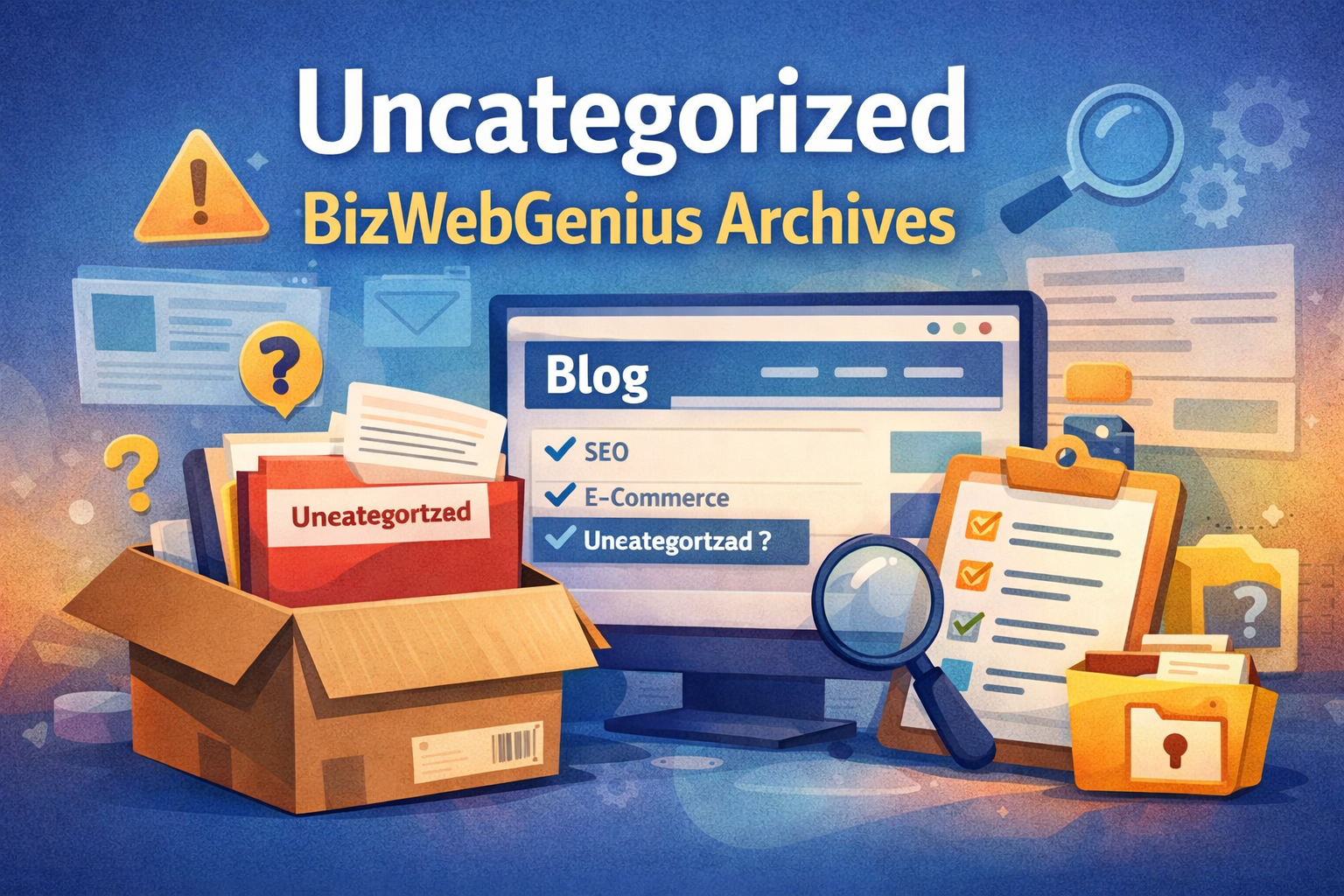
At first glance, “Uncategorized BizWebGenius Archives” sounds a little strange… and honestly, it is. It’s not a normal consumer topic like marketing tips or SEO hacks. It’s more of a website structure term — the kind of phrase that usually shows up when a site has posts sitting in a default archive instead of being sorted into the right topic. On BizWebGenius, the visible content is already organized around clear sections like Web Analytics, SEO Techniques, and E-commerce Strategies, which tells you the site is meant to guide readers through focused business topics.
So what does this keyword really point to? Most likely, it refers to a catch-all archive page for posts that were published without a proper category. On WordPress-style sites, that default category is often called “Uncategorized.” And yes, WordPress documentation says posts get assigned to that default category when no other category is selected. It also says the default category can be changed in the dashboard settings.
That may sound small. But it isn’t.
When posts fall into an uncategorized archive, the site starts feeling less organized. Readers don’t know what to expect. Search engines get a weaker signal about what the page is actually about. And over time, useful content can kind of disappear into a messy corner of the site.
Why archive pages matter in the first place
Archive pages are not useless pages. Far from it. WordPress explains that category and taxonomy archives display posts filtered by that category, and Yoast points out that topic-based archives help visitors find older content by relevance, not just by date. That’s a big deal for blogs and business websites. Good archive pages can work like content hubs. Bad ones… well, they feel like storage closets.
Here’s a simple breakdown:
| Element | What it does | Why it matters |
|---|---|---|
| Uncategorized archive | Holds posts with no proper category | Creates a weak topical signal |
| Category archive | Groups related posts together | Improves navigation and context |
| Archive content intro | Explains the topic of the page | Helps both readers and SEO |
| Clean taxonomy structure | Avoids overlap and confusion | Makes site structure stronger |
The real problem with “uncategorized”
The issue is not just the word itself. The issue is what it represents.
If a business site leaves too many posts under “Uncategorized,” it usually means the editorial structure is loose. Maybe content was rushed. Maybe categories were never planned properly. Maybe old posts were imported and forgotten. It happens. But the result is the same: the site becomes harder to browse, and that can reduce the value of otherwise good articles. This is an inference based on how archive pages and taxonomies are meant to work.
And there’s another layer here.
Google has said duplicate content on a site is generally not a penalty issue by itself, but it can make crawling and indexing harder. It can also spread ranking signals across multiple similar URLs instead of strengthening one preferred page. So when archive pages are thin, overlapping, or badly structured, they may not help much at all.
What a better BizWebGenius archive should look like
If someone is searching for Uncategorized BizWebGenius Archives, they’re probably trying to understand hidden or poorly sorted content on the site. And the better answer is this: those posts should be cleaned up and moved into meaningful topic buckets.
A stronger archive setup would include:
- clear categories for each post
- a short intro on every archive page
- no overlap between nearly identical tags and categories
- internal links between related articles
- archive pages designed as topic hubs, not leftovers
Yoast specifically warns against duplicate or overly similar tags and categories, because that makes it harder for search engines to understand which page should matter most. It also says archive pages should match visitor intent and encourage deeper browsing.
Why this matters for readers too
But this isn’t only an SEO thing.
A visitor landing on a proper archive page can instantly tell, “Okay, this section is about SEO,” or “This one covers e-commerce strategy.” That feels clean. Confident. Useful. BizWebGenius already presents itself as a resource for mastering the digital business landscape, so organizing every article into the right archive supports that promise.
An uncategorized archive does the opposite. It feels unfinished.
And people notice that stuff, even if they can’t explain it.
Final thought
So, Uncategorized BizWebGenius Archives is really about website organization more than content discovery. It points to the hidden structure behind a business blog — and whether that structure is helping or hurting. On a site built around focused topics like SEO, web analytics, and e-commerce, uncategorized posts are usually a sign that good content needs a better home.
A clean archive doesn’t just look nicer. It makes the whole website easier to trust… and easier to use.
Want to read more like this? Check out chas6d for more interesting articles.